
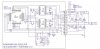
The block memories in the Virtex®-II architecture are capable of supporting data bus widths of up to 36-bits. A self-addressing FIFO reference design uses these block memories to store both data and address information in a single memory location. This application note describes FIFO designs where no external counters are required. Only flag and status information logic is used. The resulting FIFOs are not fast (around 150 MHz). Their advantage is in using only one clock load. In addition, the status mechanism is very simple making FIFOs are more suitable for data throttling in continuous data systems instead of the full or empty detection required in frame-based data systems.
xapp291.pdf
共1条
1/1 1 跳转至页
Self-Addressing FIFO

关键词: Self-Addressing

共1条
1/1 1 跳转至页
回复
 我要赚赏金打赏帖 我要赚赏金打赏帖 |
|
|---|---|
| 给28BYJ-48三自由度机械臂加一个网页控制台被打赏¥32元 | |
| 用28BYJ-48电机从零搭一台三自由度机械臂被打赏¥33元 | |
| 【英飞凌开发经验】ModusToolbox配置EdgeTalk外设被打赏¥27元 | |
| 基于BQ76952PFBR的BMS保护板热插拔损坏的原因和处理措施被打赏¥32元 | |
| 三分钟快速上手搭建nRF Connect SDK开发环境(VSCode)被打赏¥25元 | |
| 告别手动建模:我让AI用FreeCAD画了个开发板外壳被打赏¥30元 | |
| 【瑞萨RA8D1测评】总结收官——从IMU动作识别到LVGL桌宠被打赏¥33元 | |
| 【瑞萨BLE/WIFI模块测评】MPU6050双链路对比被打赏¥30元 | |
| 【瑞萨BLE/WIFI模块测评】DA14531被打赏¥28元 | |
| 【瑞萨BLE/WI-FI模块测评】DA16200被打赏¥28元 | |
 STM32
STM32 MCU
MCU 通讯及无线技术
 物联网技术
物联网技术 电子DIY
电子DIY 板卡试用
板卡试用 基础知识
基础知识 软件与操作系统
 我爱生活
我爱生活 小e食堂
小e食堂

